How free divers stay calm a hundred feet down
No tank, one breath, and a mind that refuses to panic. What they practice on land.
By Rhythm Breathwork Editorial · · 4 min read
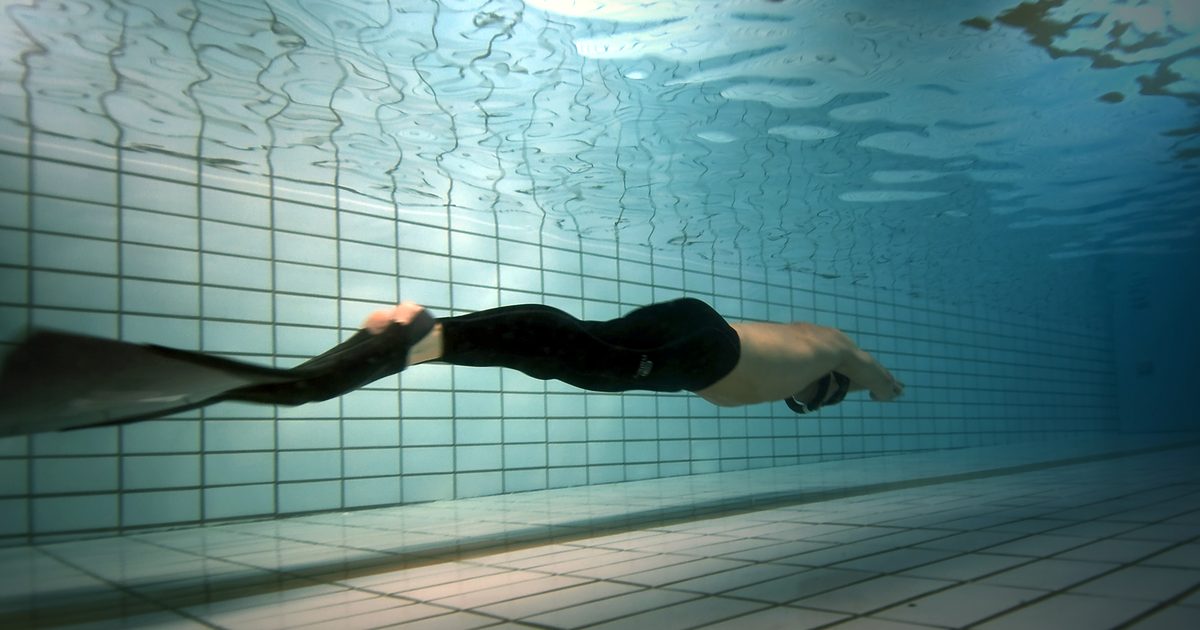
Free divers descend on a single breath. The deeper they go, the more the urge to breathe grows. What separates them from the rest of us is not bigger lungs. It is a trained calm.
The diving response
Every human carries an ancient reflex. When the face meets cold water and the breath is held, the heart slows and blood shifts toward the core to protect the brain and heart. Divers learn to work with this reflex rather than fight it.
Relaxation is oxygen
Tension burns oxygen. Divers spend years learning to soften the face, jaw and shoulders, because a relaxed body simply lasts longer.
Making friends with CO2
The urge to breathe comes from rising carbon dioxide, not falling oxygen. Gentle breath holds on dry land teach the body that this signal is information, not an emergency.
What you can borrow
You do not need to dive to use this. Slow exhales and short, comfortable holds build the same steadiness for stressful moments. Never practice breath holds in or near water without trained supervision.
Calm is not the absence of the urge to breathe. It is how you meet it.
The Research Behind This
For education only, not medical advice. Check with a doctor if you have a health condition.